
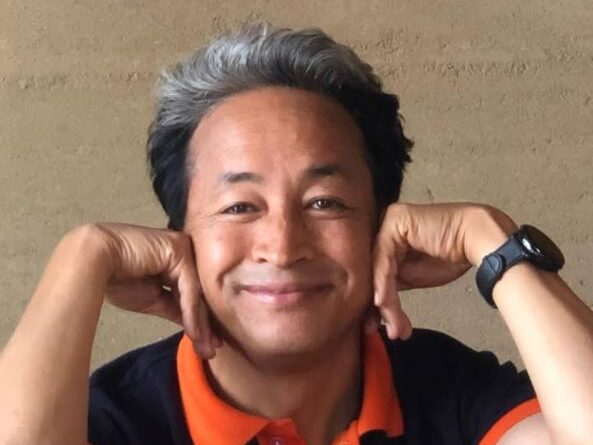
Sonam Wangchuk Biography Age, Height, Wife, Career, Net Worth & Wiki The Visionary Engineer from Ladakh
When we talk about groundbreaking innovators who have changed the landscape of sustainability and grassroots education, one name stands out globally. This detailed Sonam Wangchuk Biography delves deep into the life, achievements, and struggles of an extraordinary Indian engineer, innovator, and climate activist who has dedicated his entire existence to transforming the trans-Himalayan region of Ladakh.
From inventing the revolutionary Ice Stupas to creating sustainable, passive solar-heated earthen buildings, his journey is nothing short of an inspiration. Let’s explore the comprehensive Sonam Wangchuk Biography to understand the making of this modern-day hero.
Sonam Wangchuk Wiki and Quick Facts
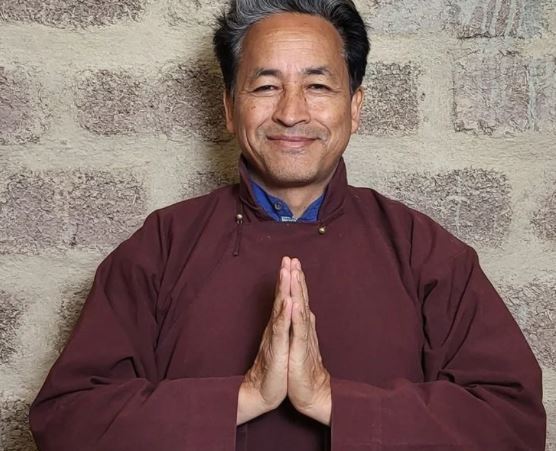
For readers looking for a snapshot of his profile, this Sonam Wangchuk Biography features a comprehensive breakdown of his personal details, background, and major life milestones.
| Attribute | Details |
| Full Name | Sonam Wangchuk |
| Profession | Mechanical Engineer, Innovator, Educator, Environmentalist |
| Date of Birth | September 1, 1966 |
| Age (as of 2026) | 59 Years |
| Place of Birth | Alchi (Leh District), Ladakh, India |
| Nationality | Indian |
| Height | Approximately 5 feet 8 inches (173 cm) |
| Spouse | Gitanjali J Angmo |
| Alma Mater | NIT Srinagar (B.Tech), CRATerre France (Earthen Architecture) |
| Key Innovations | Ice Stupa, SECMOL Campus, Mobile Solar Tents |
| Major Awards | Ramon Magsaysay Award (2018), Rolex Award for Enterprise (2016) |
| Instagram Account | wangchuksworld |
Early Life and Childhood Challenges
No Sonam Wangchuk Biography is complete without highlighting his unconventional childhood. Born on September 1, 1966, in the remote village of Alchi in Leh, Ladakh, Wangchuk did not have access to formal schooling during his early years. Because his village lacked basic educational infrastructure, he did not enter a classroom until the age of nine.
During these foundational years, his mother, Tsering Wangmo, taught him his basic lessons in his native Ladakhi language. This lack of early institutionalized schooling turned out to be a blessing in disguise, allowing him to observe nature closely and develop a deeply analytical, practical mind.
In 1975, when his father, Sonam Wangyal, was elected as a minister in the Jammu and Kashmir government, young Wangchuk moved to Srinagar. The abrupt shift to a conventional school was traumatic. He struggled significantly with language barriers and an rigid, alien system of education that focused heavily on memorization rather than actual understanding. Frustrated by this environment, he escaped alone to Delhi, eventually pleading his case directly to the principal of a Kendriya Vidyalaya to secure admission.
Educational Background and Earthen Architecture
An important cornerstone of this Sonam Wangchuk Biography is his robust educational journey, which laid the foundation for his engineering marvels.
Despite deep disagreements with his father over his choice of engineering stream—which forced him to completely finance his own higher education through independent tutoring—Wangchuk persevered. He completed his Bachelor of Technology (B.Tech) in Mechanical Engineering from the National Institute of Technology (NIT), Srinagar (then known as Regional Engineering College, Srinagar) in 1987.
Always looking to combine modern engineering with traditional, sustainable methods, he pursued higher studies much later in life. In 2011, he attended the prestigious CRATerre School of Architecture in Grenoble, France, specializing in Earthen Architecture. This unique training enabled him to develop low-cost, natural building techniques tailored perfectly for the harsh, freezing climates of high-altitude regions.
Revolutionizing Classrooms: SECMOL and Educational Reforms
Upon returning to Ladakh after completing his degree, he realized that the local education system was failing the youth completely. The matriculation exam failure rate in Ladakh was a staggering 95%. The textbooks, written in languages unfamiliar to the children and contextually irrelevant to mountain life, made learning an uphill battle.
In 1988, as documented in every authentic Sonam Wangchuk Biography, he co-founded the Students’ Educational and Cultural Movement of Ladakh (SECMOL). The primary objective was to reform government schools and provide a nurturing home for students who had been labeled “failures” by traditional standards.
- Operation New Hope (1994): Wangchuk launched a collaborative initiative between the government, local communities, and civil society. By retraining teachers and introducing localized textbooks, the 10th-grade pass rate drastically skyrocketed from a mere 5% to 75% over the years.
- The SECMOL Alternative School Campus: Located near Leh, this campus is entirely carbon-neutral. It runs fully on solar energy and uses absolutely no fossil fuels for cooking, heating, or electricity. Intriguingly, the campus intentionally opens its doors to students who have failed their state exams, providing them with hands-on vocational skills in electronics, organic farming, and entrepreneurship.
Pioneering Environmental Innovations: The Ice Stupa Project
This section of the Sonam Wangchuk Biography focuses on his most internationally recognized technological breakthrough: the Ice Stupa.
Ladakh faces severe water shortages during the crucial spring planting season of April and May, as global warming causes natural glaciers to recede further up the mountains. In 2013, Wangchuk conceived an ingenious solution. By piping winter stream water down to the valleys through underground pipes, the built-up pressure creates a vertical fountain. In the freezing winter air (dropping down to -30°C), this water immediately freezes as it falls, forming massive, conical towers of ice.
Why the conical shape? The unique geometry minimizes the surface area exposed to direct sunlight, meaning these artificial glaciers melt far slower than flat ice sheets.
As spring arrives, the Ice Stupas slowly thaw, releasing steady streams of fresh water directly to the farmers’ fields when they need it most. For this monumental invention, he was honored with the prestigious Rolex Award for Enterprise in 2016.
Public Activism and Current Social Crises
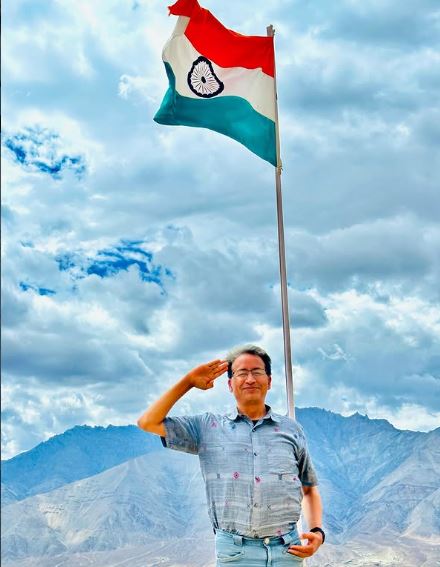
A true and up-to-date Sonam Wangchuk Biography must also highlight his fearlessness as a social reformer and activist. Over the last decade, he has consistently raised his voice for the constitutional protection of Ladakh, advocating for its inclusion under the Sixth Schedule of the Indian Constitution to safeguard its fragile ecology and indigenous culture from corporate exploitation.
More recently, his activism has taken on a national scale. In mid-2026, Wangchuk initiated an indefinite hunger strike at Jantar Mantar in New Delhi alongside students and civil society groups to demand urgent education reforms, accountability regarding national exam irregularities (such as the NEET-UG paper leaks), and structural changes to the country’s evaluation methods. On July 18, 2026, entering the 21st day of his intense fast, his health drastically deteriorated, leading to an emergency hospital transfer to Safdarjung Hospital following a directive from the Delhi High Court. Despite immense physical strain, his unyielding resolve continues to capture the heart of the nation.
Major Awards and Global Recognition
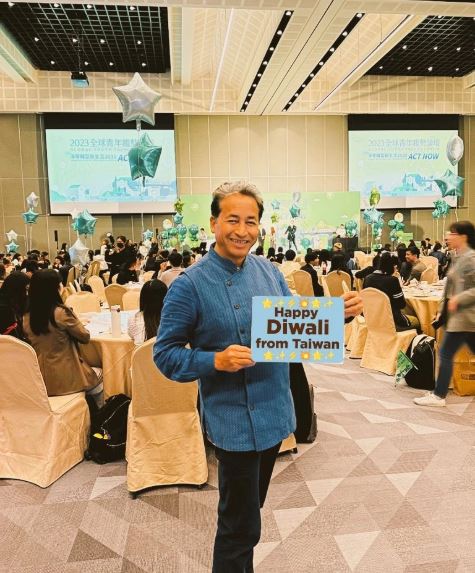
Throughout his life, his tireless devotion to humanity has earned him profound praise. The accolades featured in this Sonam Wangchuk Biography underscore his international impact:
- Ashoka Fellowship for Social Entrepreneurship (2002)
- The Green Teacher Award by Sanctuary Asia (2004)
- CNN-IBN Real Heroes Award (2008)
- International Terra Award (2016)
- Rolex Award for Enterprise (2016)
- Global Award for Sustainable Architecture (2017)
- Ramon Magsaysay Award (2018): Often referred to as Asia’s Nobel Prize, awarded for his community-driven educational reforms and climate-resilient engineering.
The “3 Idiots” Connection: Myth vs. Reality
It is widely rumored across the internet that the iconic character of Phunsukh Wangdu (played by Aamir Khan) in the blockbuster Bollywood film 3 Idiots (2009) was directly based on him. While the character’s innovative spirit, passion for practical education, and Ladakhi school setting undeniably mirror his work at SECMOL, public statements have clarified that the character was an amalgamation of multiple inventors, and not a direct, official depiction. Nonetheless, the cinematic representation brought massive, well-deserved mainstream focus to his revolutionary work.
Conclusion: An Enduring Legacy
In wrapping up this extensive Sonam Wangchuk Biography, it is evident that he is far more than just a mechanical engineer. He is a living testament to how localized, sustainable, and compassionate engineering can solve complex global challenges. Whether reforming local school structures, fighting for political autonomy, or battling the harsh realities of climate change, he remains a monumental icon for future generations worldwide.
For the latest updates and detailed accounts of green tech pioneers, keep exploring our platform at Go Wiki Bio.
Key Information Summary Table
| Focus Topic | Core Life Takeaway |
| Education Reform | Shifted Ladakh’s pass rate from 5% to 75% via experiential learning. |
| Climate Action | Created Ice Stupas to combat drought and seasonal water crises. |
| Sustainability Philosophy | Built completely solar-heated earthen structures requiring zero fossil fuels. |
| Social Stand | Currently risking his life for student rights and national education reforms. |
So, I hope you like the information about Sonam Wangchuk Biography. Also, subscribe us to get more latest updates on politicians. Press the Bell Icon on the right bottom to get notifications on the new Cricketers and other celebrities.
You may also like Anshul Chauhan Biography (Raakh) Wiki, Age, Career, Groundbreaking Role as Nisar Rizvi in Raakh
Since sharing is caring. So don’t forget to share this post with your friends.


